
Need water damage restoration in Seattle?
Describe what happened and we will connect you with a local provider. Request a callback to check availability, or send a note to contact@ilmeanwhile.living.
No obligation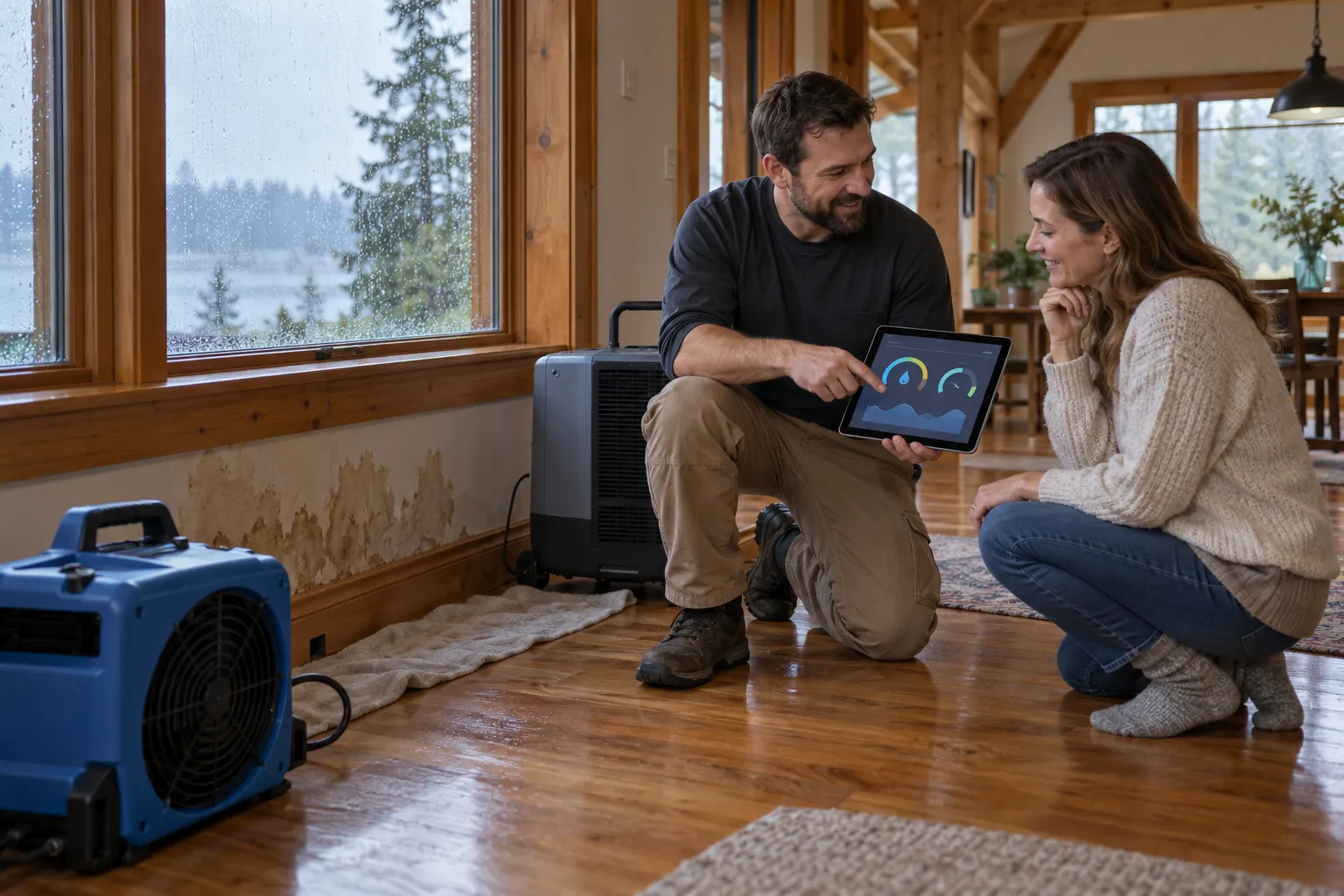
Water damage restoration is the full process of getting a wet home back to a dry, safe, usable state. It starts with stopping the source and removing standing water. It continues with drying, cleaning, and repairing whatever the water touched.
Ilmeanwhile Restoration is a referral service. We do not do the work ourselves. We explain how the process works in plain words, then connect you with independent providers in the Greater Seattle area. You can compare their estimates and approaches, ask your questions, and decide at your own pace with no obligation. Think of us as a neighbor who knows how houses work and points you to people who do the job every week.
If water is still coming in, stop the source first. Shut off the main valve if a pipe has burst. If water is near outlets or appliances, leave the power off and stay out of that room. Then take photos, lift small items onto dry ground, and start looking for a provider.
Request a callback to check provider availability near you. Many providers can respond quickly, but hours vary, so ask when someone could arrive.
Think of a paper towel touching a puddle. The water climbs up the towel long after the edge first got wet. Your home works the same way. Drywall, wood framing, and insulation all pull moisture upward and outward, far from the spot you can see.
That is why a small leak can leave a wall wet inside while the surface looks fine. The sooner wet materials start drying, the less repair they usually need later.
Restoration is not one task. It is a chain of steps, and each one sets up the next.
A provider may do all of these or only some, depending on the damage. Ask each one to list which steps are in the estimate.
Treat water types like a kitchen spill versus a spill from the trash can. Both are wet, but you clean them very differently.
Clean water comes from a broken supply line or a leaking faucet. Gray water comes from a washing machine or dishwasher and may carry soap or light dirt. Black water comes from sewage or rising floodwater and can carry harmful germs.
Clean water left sitting can turn gray in a day or two. Black water usually means more materials are removed and not dried in place. Knowing the type helps you judge whether an estimate makes sense.
When a provider arrives, expect a walk-through first. They check which rooms are wet, often using a moisture meter. Then they explain the plan and give you a written estimate.
For emergency water damage repair, the early work focuses on getting the water out and protecting what is still dry. Larger repairs like new drywall or flooring often come after the home has dried. That order is normal, and it protects you from paying to rebuild over damp materials.
A basement is like the bottom of a bowl. In a long rainy season, water collects there when the ground is soaked and drains cannot keep up.
Flooded basement cleanup often involves pumping out water, removing wet items, and drying the concrete and any framed walls. Finished basements take longer because carpet, drywall, and insulation hold moisture. Mild, damp weather also slows natural drying, so providers usually rely on equipment rather than open windows.
A crawl space is easy to forget because nobody goes there. Yet in wood-frame homes, damp air and soaked soil can feed moisture straight into floor framing. Older craftsman houses may have settled foundations or aging pipes that let water in. Newer townhomes can have shared walls where a leak travels from one unit to the next.
If your home fits any of these, tell the provider. It changes where they look and what they check.
Picture getting three quotes for a roof. You would not sign the first one on the spot. Restoration deserves the same patience, even when you feel rushed.
Look at what each estimate covers, not just the total. One may include drying equipment and moisture readings. Another may list only cleanup. A lower number is not a better deal if it leaves out the drying.
Write down the answers side by side. The pattern usually becomes clear.
Some policies may cover sudden damage, such as a burst pipe, while slow leaks and outside flooding are often treated differently. Check your policy or ask your agent before you assume anything.
Providers can often help document damage for a claim. Keep your photos, receipts, and the written estimate together in one folder.
A repaired home is like a patched bike tire. It holds, but the cause of the flat still needs attention. Ask the provider what led to the damage and what to watch for.
A few simple routines go a long way in a rainy region.
These take minutes, and they catch problems while they are still small.
Gather two or three estimates, line up the answers, and pick the provider whose plan is clearest to you. Dry it properly, then keep water out. If you want help starting, request an estimate, or request a callback to check provider availability. There is no obligation either way.
Pumps and vacuums pull standing water out of rooms, basements, and crawl spaces so drying can start.
Air movers and dehumidifiers pull moisture from framing, floors, and walls.
Affected surfaces and belongings are cleaned to help make the space safe to live in again.
Once everything is dry, damaged drywall, flooring, and trim can be repaired or replaced.
Prices vary a lot by the amount of water, the type of water, and the materials involved. These are general U.S. ranges only, so always ask each provider for a written quote.
| Service | Typical range | Notes |
|---|---|---|
| Small leak cleanup and drying | $500 – $1,500 | One room, clean water, caught early |
| Water extraction | $300 – $1,200 | Depends on depth and area |
| Structural drying equipment | $1,000 – $5,000 | Based on days of equipment use |
| Flooded basement cleanup | $1,500 – $6,000 | Higher if finished or contaminated |
| Drywall and flooring replacement | $1,000 – $7,000 | Varies by size and materials |
| Large multi-room restoration | $8,000 – $30,000+ | Includes drying, removal, and rebuild |
Shut off the water if you safely can, and keep the power off in wet areas.
Take photos and notes of wet areas and damaged items for your records.
Review written estimates and ask what each includes, especially drying and moisture checks.
Let the provider dry the structure, finish repairs, then follow simple upkeep habits.
We explain how restoration works in simple words so you can follow what any provider tells you.
Looking at estimates side by side helps you spot what each one includes.
Requesting an estimate carries no obligation, and you choose when to move forward.
Independent providers in your area know the local damp climate and common home types.
Describe what happened and we will connect you with a local provider. Request a callback to check availability, or send a note to contact@ilmeanwhile.living.
No obligationMany jobs take several days for drying, with repairs afterward. Time depends on how much water got in, what it soaked, and the weather. Ask each provider for an expected timeline in writing.
Some policies may cover sudden damage, so contact your insurer, but you usually should not leave wet materials sitting. Take photos first, and ask providers to help document the damage for a claim.
Fans help with small, surface-level spills. Water inside walls or under floors often needs moisture meters and dehumidifiers, so ask a provider to check before you assume it is dry.
Describe what happened and we will connect you with a local provider. Request a callback to check availability, or send a note to contact@ilmeanwhile.living.
No obligation