
Need water extraction and structural drying in Seattle?
Describe what happened and we will connect you with a local provider. Request a callback to check availability, or send a note to contact@ilmeanwhile.living.
No obligation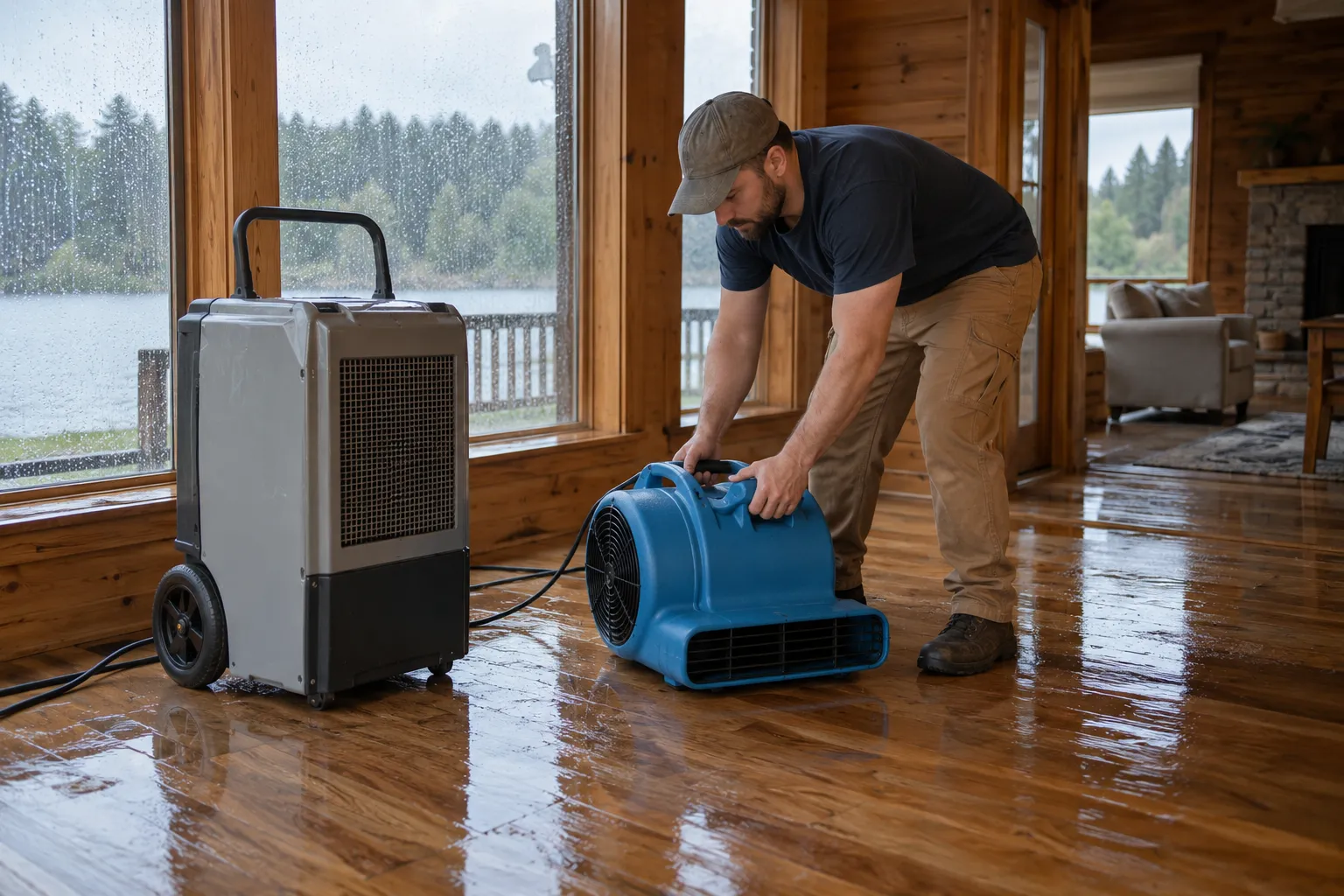
Water extraction is the first stage of a wet-home repair. A provider uses pumps and wet vacuums to pull standing water from floors, basements and crawl spaces. Structural drying comes next. It uses air movers and dehumidifiers to draw moisture out of framing, subfloors and walls that still hold water you cannot see.
Ilmeanwhile Restoration is a referral service, not a restoration company. We explain the process in plain words and connect homeowners in the Greater Seattle area with independent local providers. Each provider sets its own scope and price, so you can compare estimates, ask questions and decide at your own pace. There is no obligation to hire anyone.
If water is pooled on a floor, in a crawl space or in a flooded basement, getting it out is the first job. Think of a bathtub that will not drain. Nothing around it can dry until the tub is empty. Emergency water damage repair usually begins with removing the pool, because drying cannot start underneath it.
Water does not stay where it lands. It soaks into drywall, climbs the bottom of walls and slips under flooring, much like a paper towel pulling up a spill. The longer it sits, the farther it spreads. In a mild climate with a long rainy season, the air is already damp, so materials dry slowly and mold gets a head start. Many providers can respond quickly, but availability varies.
Water extraction means pulling liquid out with machines. For deep water, a provider uses a pump. For shallow water and wet carpet, a powerful wet vacuum does the work. It is like draining a sink first and mopping second. The goal is to remove as much water as possible before any drying equipment is set up.
A good provider looks around before touching anything, the way a doctor checks you before treatment. They look at electrical risks, hazards from gas appliances and the source of the water. Rain runoff or a sewage backup carries germs, so it needs different handling than a clean supply line leak. Ask which type of water the provider believes you have.
A floor can feel dry on top and still be soaked below. Picture a sponge that is dry on the surface but heavy inside. Water hides in subfloors, insulation, wall cavities and the wood framing common in older craftsman houses and newer townhomes. If it stays there, you may see musty smells, warping or stains weeks later.
Structural drying uses two kinds of machines together. Air movers push air across wet surfaces. Dehumidifiers pull the moisture out of that air and collect it. Think of laundry on a line: wind helps, but dry air helps more. Together they move water out of wood and drywall that you cannot simply wipe down.
Providers use meters to measure moisture in walls, floors and framing. They take readings at the start and again on later visits. This works like checking a thermometer rather than guessing a fever. Dry standards are compared against unaffected parts of your home. Ask to see the readings so you know when the job is truly done.
Most drying runs a few days, though it varies a lot. Thin drywall dries like a cookie; thick hardwood and subfloors dry like a loaf of bread. Wet-season humidity, the size of the area and how long the water sat all change the timeline. A provider should give you a range, then adjust based on readings.
Flooded basement cleanup often involves concrete floors, stored items and sump pits. Crawl spaces add another challenge: they are low, dark and slow to dry. Wood-frame homes can hold moisture under the floor for a long time. Ask how the provider will reach and dry these tight areas, and whether they plan to check vents and vapor barriers.
A few small steps help while you arrange a provider:
Two estimates can look different because they describe different jobs. One might include drying monitoring and the other might not. Think of comparing two moving quotes: the cheaper-looking one may leave out stairs. Line up what each provider covers, then decide without pressure. Asking for a written scope is reasonable.
Bring a short list to each conversation:
Some policies may cover sudden damage, so check your policy and ask your insurer what applies. Providers can often help document damage for a claim with photos, moisture logs and written notes. Keep every receipt and report in one folder. Coverage depends on your policy and the cause of the water, so confirm details before work begins.
Once your home is dry, think of prevention like an umbrella kept by the door. Clean gutters before the rainy season. Point downspouts away from the foundation. Check crawl space vents and any vapor barrier each season. Test your sump pump. Know where your main shutoff valve is. Keep water out, and the next storm becomes just weather.
Pumps and wet vacuums pull water from floors, basements and crawl spaces so drying can start.
Meters find hidden damp spots in walls, subfloors and framing.
Machines work together to pull moisture from wood, drywall and the air in the room.
Providers recheck readings during drying so you can see when the structure reaches normal levels.
Prices vary by job size, water type and how long the water sat. These are typical U.S. ranges only, so get a written quote that lists what is included.
| Item | Typical range | Notes |
|---|---|---|
| Moisture inspection and mapping | $150 – $500 | Often bundled into the full job estimate |
| Water extraction, small area | $250 – $1,000 | One or two rooms with shallow water |
| Pumping a flooded basement | $800 – $4,000 | Depends on depth and volume of water |
| Drying equipment, several days | $1,000 – $4,000 | Based on count of machines and days |
| Removing wet drywall or insulation | $500 – $2,500 | Needed when materials stay wet |
| Crawl space drying | $1,000 – $5,000 | Tight access can add labor time |
Tell us what happened, how much water there is and which areas are wet.
We connect you with independent local providers who handle extraction and drying.
Look at scope, equipment, monitoring and price before choosing anyone.
Your chosen provider removes the water and dries the structure to normal readings.
Review several estimates side by side and decide with no obligation.
Each provider sets its own scope, price and schedule.
Clear answers on extraction and drying help you ask smarter questions.
Simple habits afterward help keep water out for the next wet season.
Describe what happened and we will connect you with a local provider. Request a callback to check availability, or send a note to contact@ilmeanwhile.living.
No obligationMost homes need a few days, though thick wood, subfloors and damp weather can add time. A provider should share moisture readings and update the estimate if the structure dries slower than expected.
Fans help with a small, shallow spill on a hard surface. But water in subfloors, walls or crawl spaces often needs dehumidifiers and meters. If you are unsure, ask a provider to check.
Some policies may cover sudden damage, such as a burst pipe, but not slow leaks or flooding. Check your policy and ask your insurer. Providers can often help document damage for a claim.
Describe what happened and we will connect you with a local provider. Request a callback to check availability, or send a note to contact@ilmeanwhile.living.
No obligation