Questions and answers
How quickly should I get help after finding water in my home?
As soon as you safely can. Think of a wet sponge left on a counter. The longer it sits, the more it spreads and the harder it is to dry. Wet drywall, wood and carpet can start to grow mold within a couple of days. Request a callback to check provider availability, since many providers can respond quickly, though timing varies.
Will my homeowners insurance pay for water damage?
It depends on your policy and the cause. Some policies may cover sudden damage, like a burst pipe, while slow leaks or flooding from outside are often treated differently. Read your policy or ask your insurer. Providers can often help document damage with photos and notes, which is useful when you file a claim.
How do I compare water damage estimates fairly?
Ask each provider for a written quote and line them up side by side. Look at what is included, such as water extraction, drying equipment, how long drying will take, and repairs afterward. A lower number may leave things out. Compare, then decide. You can ask questions and take your time, with no obligation.
What questions should I ask a provider before hiring?
Ask if they are licensed and insured where you live, what drying method they plan to use, and how they will check that the structure is dry. Ask who handles repairs afterward and how changes in price are explained. Good providers answer plainly. If an answer feels vague, that tells you something useful.
How long does structural drying usually take?
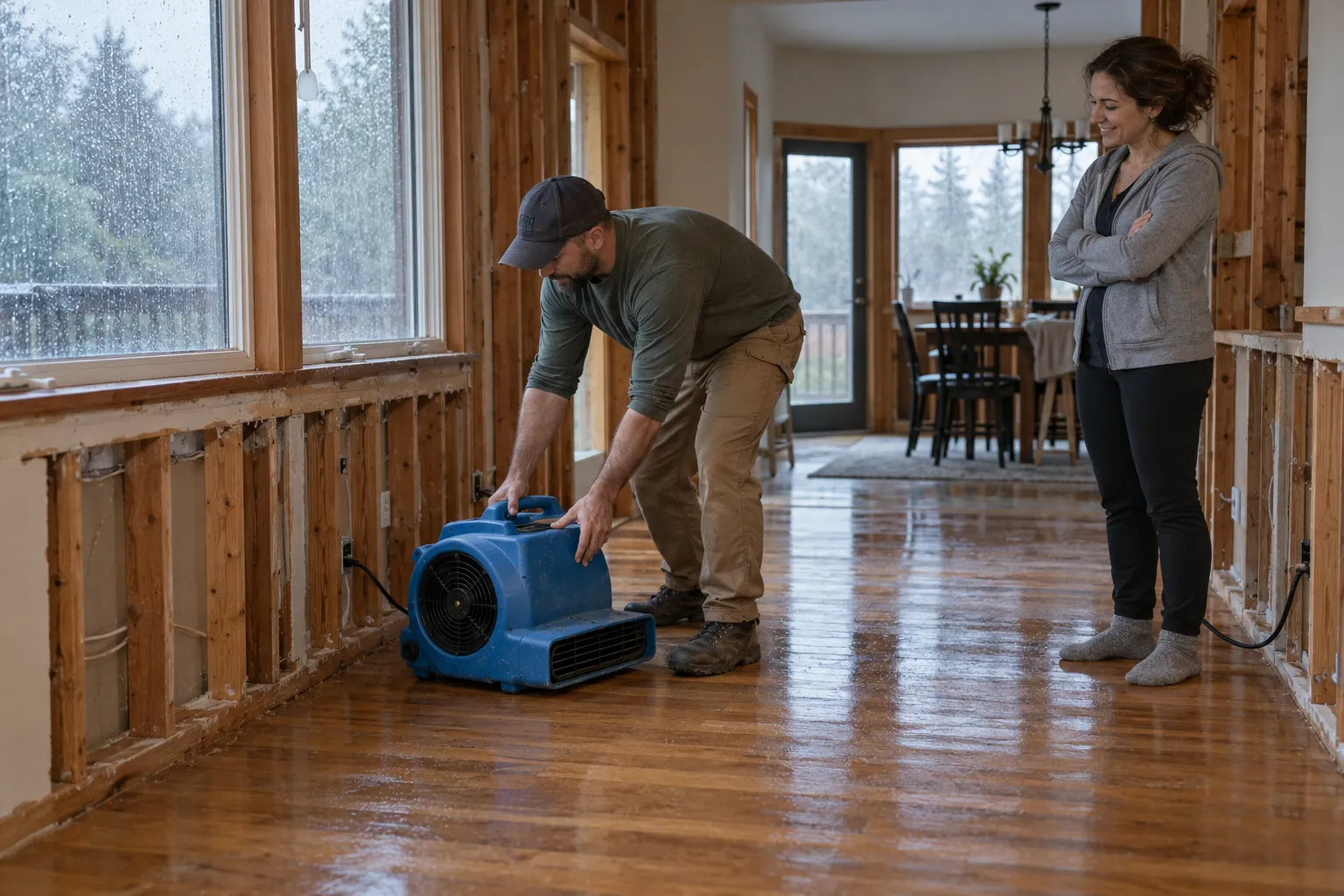
Often a few days, though it varies with how much water got in and what it soaked. Drying a house is like drying a thick towel. The surface feels dry first, while the inside holds moisture longer. Providers use meters to confirm materials are truly dry before closing walls. Dry it properly, and later problems are less likely.
Is it safe to clean up a flooded basement myself?
Small, clean-water spills may be manageable, but be careful. Turn off power to wet areas first, since water and electricity are a risky mix. If water came from a sewer, an outside flood, or sat for days, it may carry germs. In those cases, a local provider is usually the safer choice.
How can I keep water out after the repair is done?
Start with small habits. Keep gutters clear and downspouts pointing away from the house, since our wet season sends a lot of rain to your foundation. Check under sinks and near water heaters a few times a year. Watch crawl space vents for damp. Keep water out by catching small leaks early.
What does water damage restoration typically cost?
In the U.S., small jobs may run from a few hundred dollars to a few thousand, while larger floods can cost much more. Price depends on how much water, how long it sat, and which materials were hit. Costs vary by job, so request written quotes from more than one provider before you decide.