Start Here When Water Gets In
Water in the wrong place is stressful. A pipe bursts, wind-driven rain finds a gap, or a washing machine hose lets go. Suddenly the floor is wet and you are not sure what to do first.
Think of a wet house like a sponge left in a sink. The water you can see is only the surface. The rest soaks into wood, drywall and insulation, and it stays there until someone dries it on purpose.
Ilmeanwhile Restoration is a referral service, and it does not do the work itself. It connects homeowners in Seattle, WA with independent local providers who handle emergency water damage repair, flooded basement cleanup, water extraction and structural drying. Many providers can respond quickly, but availability varies from one to the next.
Request a callback to check provider availability and tell them what happened. You can then compare what each provider suggests and decide at your own pace, with no obligation.
Would you rather write it all down first? You can request an estimate and read the details before you choose anyone.
How It Works
What this service is
Ilmeanwhile Restoration works a bit like the front desk at a busy clinic. You tell the desk what is wrong, and it points you to someone who treats that problem. The desk does not give the treatment. In the same way, Ilmeanwhile Restoration does not dry, clean or rebuild anything. Independent providers in our network do that work under their own names and terms.
How a referral goes
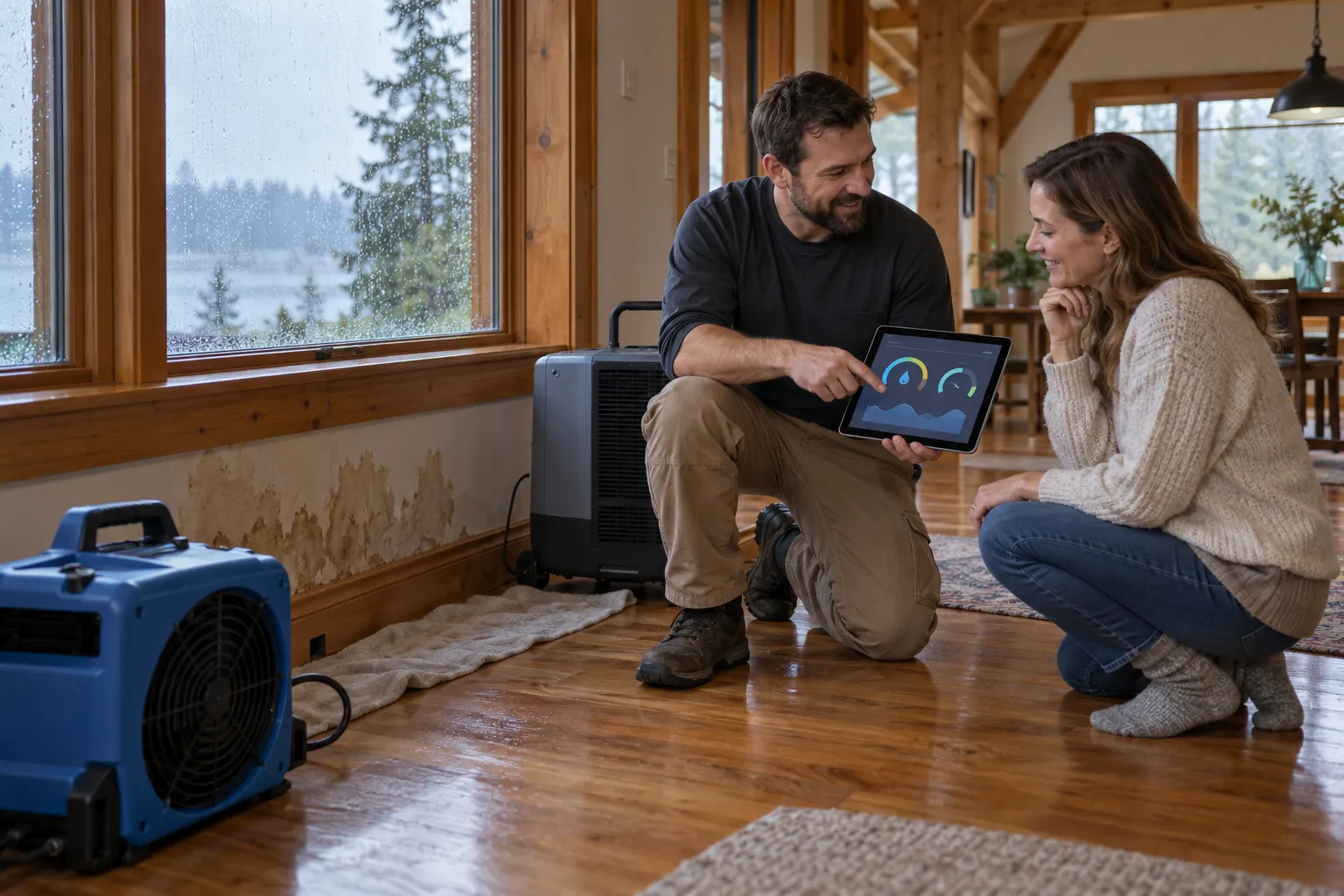
First, you share a few details: where the water is, what caused it, and how long it has been there. Next, you are connected with a local provider who works on water damage. That provider can explain what the job involves, what it may cost and how long it could take. Ask as many questions as you like. Nothing is decided until you say so.
Why comparing is worth the few minutes
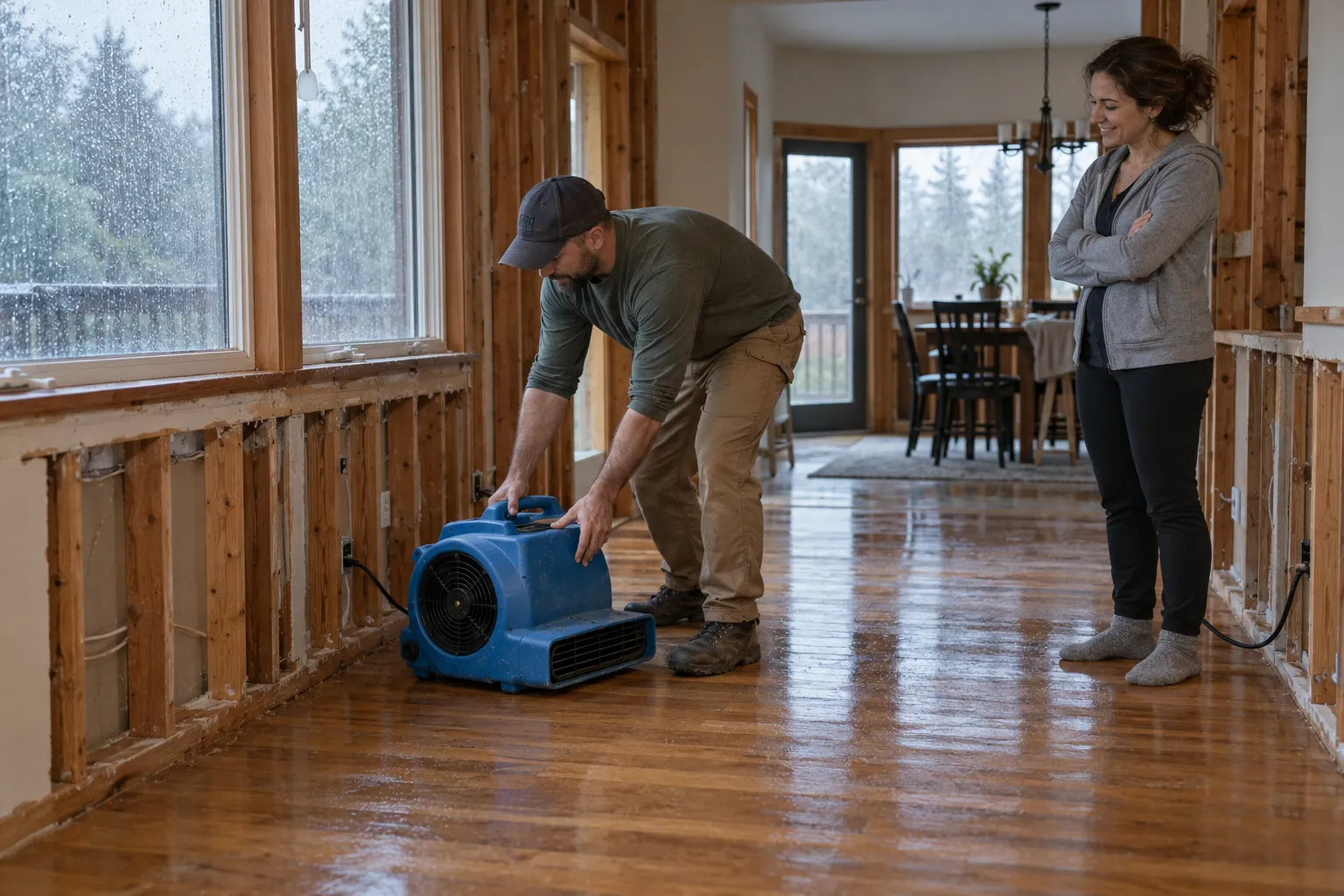
Providers are independent, so their methods, prices and schedules differ. One may suggest pulling up a section of flooring to dry underneath. Another may suggest drilling small holes and drying in place. Both can be reasonable depending on the house. A written quote from each lets you see the differences side by side and pick the plan that fits your home and budget.
What happens after the water is gone
A careful provider will tell you what caused the problem and how to keep it from returning. Fixing the damage is only half of the story. The other half is the small habits that keep the next leak or storm from turning into a big job. You will find those habits further down this page.
Serving Seattle and Nearby
Ilmeanwhile Restoration helps homeowners across Seattle and the Greater Seattle area. Our part of Washington has a long wet season, steady rain, mild temperatures and the occasional windstorm. That mix means damp is a regular visitor, and small leaks can go unnoticed for a long time.
The homes here matter too. Many are wood-frame houses, and wood takes in moisture and holds it. Older craftsman houses often have crawl spaces and aging pipes. Newer townhomes share walls and floors, so a leak in one unit can reach another.
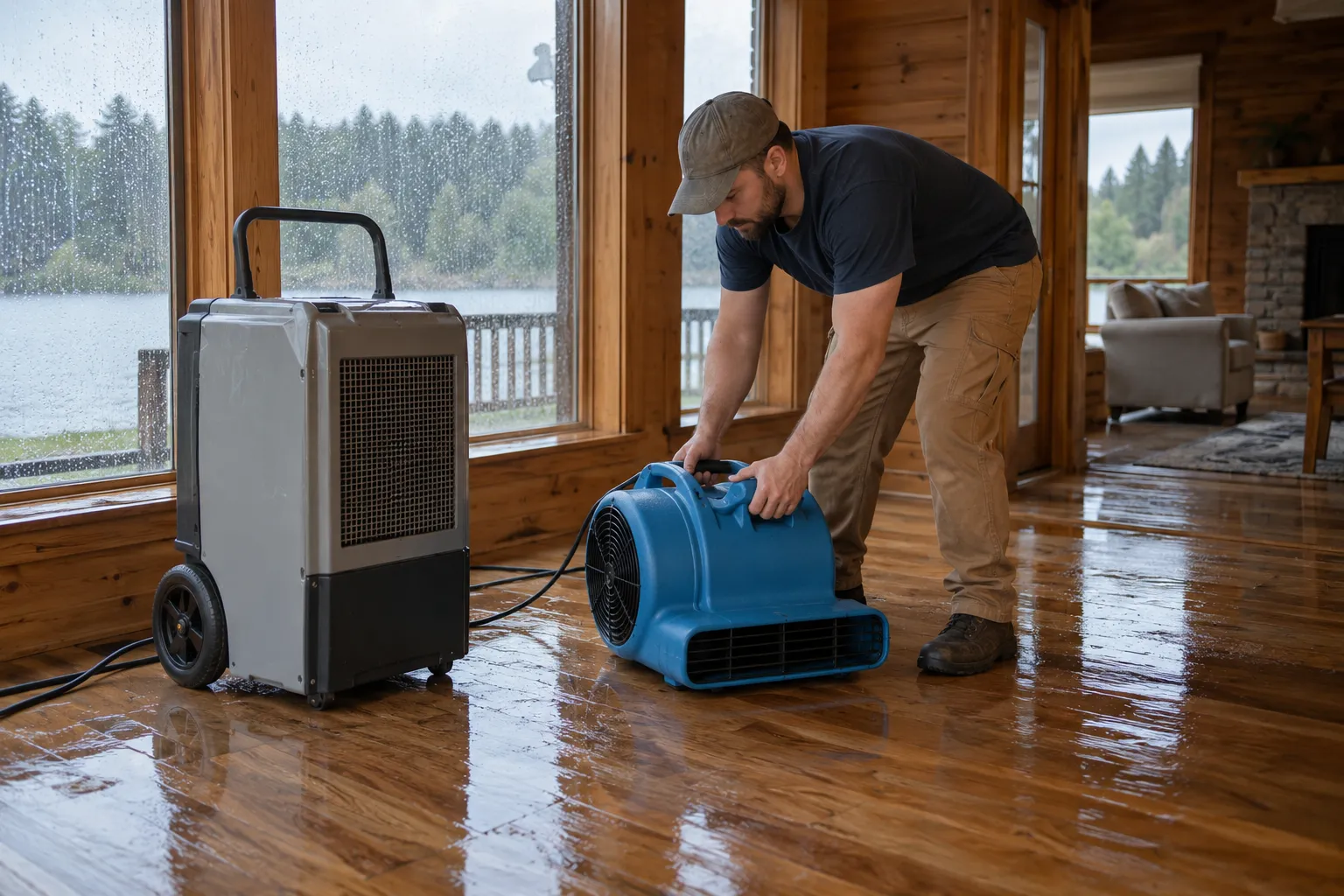
Think of a wooden cutting board left wet on the counter. It looks fine on top, but the moisture works into the grain. Framing and subfloors behave the same way, which is why drying matters as much as removing standing water.
Providers in our network know these local building styles and this climate. Request a callback to check which providers are available near you, and ask each one how they would handle your type of home.
If you would rather compare in writing first, you can send a request and look over the responses when you are ready.
Keeping Water Out After Repairs
Once your home is dry and repaired, a few habits can help protect it. Think of them like brushing your teeth. Each one is small, but together they prevent a much bigger visit later.
Clear the gutters and downspouts
Gutters carry rain away from the walls. When they fill with leaves and needles, water spills over and runs down siding or into the foundation. Check them before the rainy season starts and again after big storms.
Look under the house
If your home has a crawl space, peek in a few times a year with a flashlight. You are looking for standing water, damp insulation, dripping pipes or a musty smell. Vents should stay clear so air can move.
Control moss and damp outside
Moss on a roof holds moisture against the shingles. Soil piled against siding does the same to the wall. Keep plants trimmed back and make sure the ground slopes away from the house.
Prepare for windstorms
High wind can lift shingles and loosen flashing. After a storm, scan the roofline and look in the attic for damp spots or daylight. Small repairs made early are usually simpler than repairs made after a leak.
Know your shutoff valve
Find the main water shutoff before you need it. Make sure every adult in the home can turn it. Test it once a year so it does not stick when it matters.
Replace old hoses and supply lines
Washing machine hoses, dishwasher lines and toilet supply lines wear out. Look for bulges, cracks or rust at the fittings. Many people replace braided hoses every few years as a simple precaution.
Watch humidity and mold signs
Inside air that stays damp invites mold. A small humidity meter, steady ventilation and a dehumidifier in basements can help. If you notice a musty smell or dark spots, ask a local provider to take a look.
Ask your provider for a prevention note
When the job ends, ask what caused the problem and what you can do about it. Some providers can often help document damage for a claim, and some policies may cover sudden damage, so check your policy as well.
Talk to a Provider
Ready to talk it through? Request a callback to check provider availability and share what is going on. Ask questions, compare what you hear, and take your time deciding. There is no obligation.
If you prefer, send the details and request an estimate. You can also write to contact@ilmeanwhile.living.