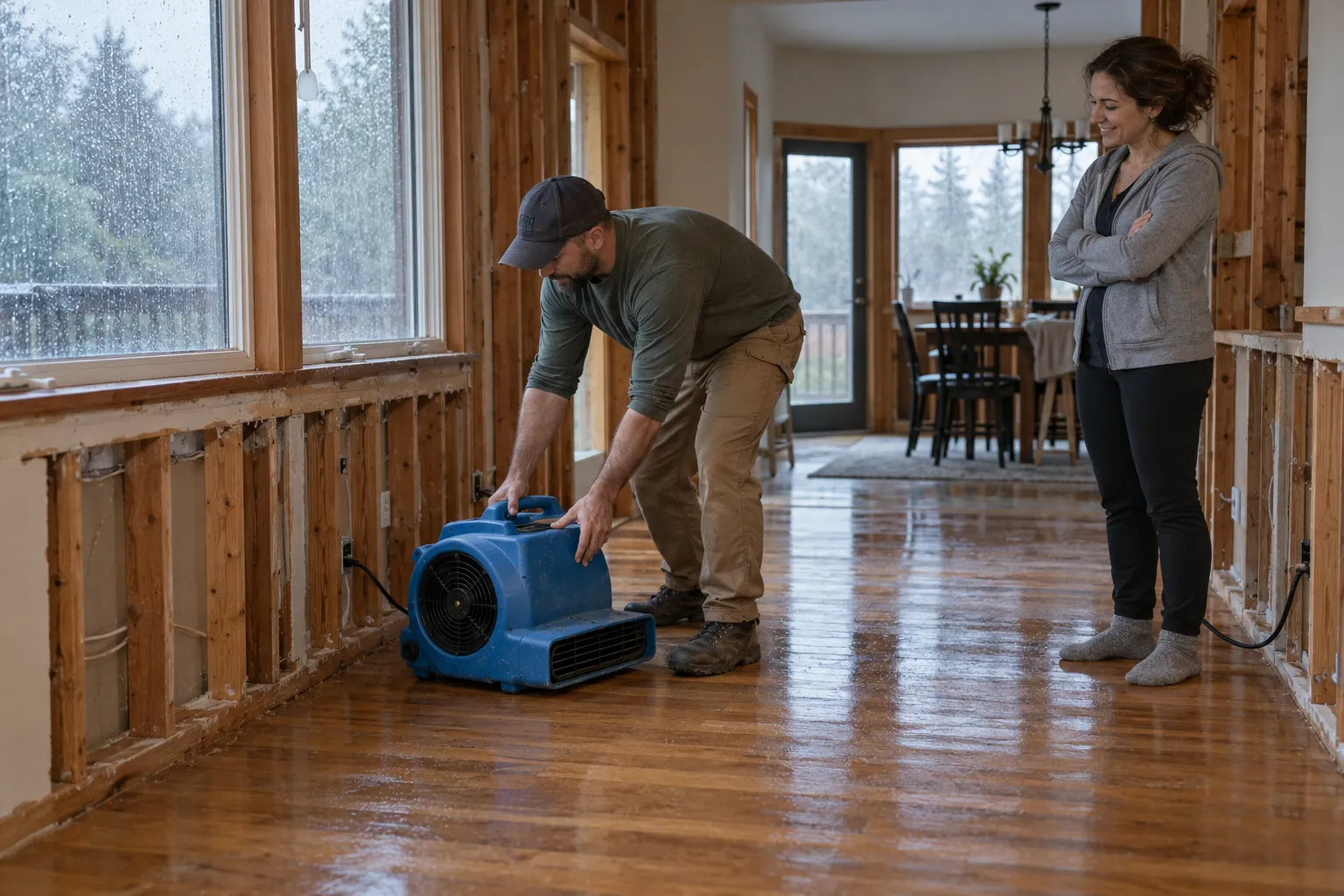
In a long wet season, water damage rarely arrives as one dramatic event. More often it creeps in through a clogged gutter, a damp crawl space or a slow drip under a sink. Home maintenance is a bit like brushing your teeth. Small, regular steps are boring, and they keep the big bills away. This calendar follows the seasons in the Greater Seattle area, for wood-frame homes, crawl spaces, older craftsman houses and newer townhomes. Adjust it to your own house.
Autumn: get ready before the rain settles in
This is like checking your umbrella before the storm, not during it. Rain is steady in this region, so the goal is to give water an easy path away from the house.
- Clear gutters and downspouts of leaves and needles
- Make sure downspouts carry water well away from the foundation
- Look at roof flashing around chimneys, vents and skylights
- Check that crawl space vents are not blocked and that ground cover is in place
- Test a sump pump, if you have one, by pouring in a bucket of water
- Trim branches that hang over the roof
Winter: watch during storms
Winter is like watching a pot on the stove. You do not need to stare at it, but you should glance over often. Wind and heavy rain show weak spots quickly.
- After windstorms, look for lifted shingles, fallen branches and damaged gutters
- Scan ceilings and upper wall corners for new stains
- Peek into the attic, if it is safe, for damp insulation or daylight where there should be none
- After several rainy days in a row, check the crawl space for standing water, only if access is safe
- During cold snaps, insulate exposed pipes and know where your main shutoff is
- Notice musty smells and window condensation, which can point to trapped moisture
Request Service
Spring: inspect and repair
Spring is the car check after a hard winter. You are looking for what the wet months quietly changed.
- Remove moss from the roof gently. Moss holds moisture against shingles. Avoid harsh pressure washing, which can push water under them.
- Check caulk around windows, exterior doors, tubs and showers
- Press on siding and trim, looking for soft or darkened wood
- Walk the perimeter and confirm the soil slopes away from the foundation
- Look under sinks and around the dishwasher and washing machine for stains or drips
Soft wood and dark staining are worth having a qualified person look at. They may point to a slow leak that has been going on for some time.
Summer: use the dry window
Summer is the weekend you finally paint the fence. Dry weather is the natural time for bigger jobs, since repairs are easier when nothing is dripping.
- Schedule roof repairs, gutter replacement or regrading near the house
- Replace old washing machine hoses, which can split without warning
- Check the base of the water heater for rust or drips
- Repair or add crawl space ground cover, and ask about drainage if it stays damp
- Service the sump pump and test any battery backup
Summer is also a good time to book inspections. Providers' schedules can be more open before the rainy months arrive, though availability always depends on the provider.
Habits that help all year
Some habits do not belong to any one season.
- Make sure everyone in the home knows where the main water shutoff is
- Run bathroom fans and kitchen vents to move humid air out
- Watch your water bill for increases you cannot explain
- Fix small drips promptly, since a slow drip can soak framing for a long time
If you find damage anyway
Even a careful household can find a wet wall or a flooded crawl space. If that happens, stop the source if it is safe, take photos and write down what you see. Then compare more than one written estimate before you agree to anything. Requesting an estimate through Ilmeanwhile Restoration carries no obligation, and independent providers set their own terms.
Request Service
More homeowner guides